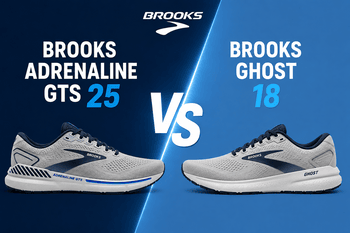
If you’re looking for a comfortable everyday running shoe, two Brooks models are likely to appear near the top of your list: the Brooks Ghost 18 and the Brooks Adrenaline GTS 25.
At first glance, the two shoes have plenty in common. Both are designed for road running, both offer balanced cushioning, and both are suitable for everyday training and walking. T
here is one big difference that separates them: the Ghost is a neutral running shoe, while the Adrenaline GTS provides structured support. So which one should you choose? The answer depends largely on how your foot moves when you run and whether you prefer a more natural-feeling ride or additional stability.
Brooks Ghost vs Adrenaline: Quick Comparison
| Feature | Brooks Ghost 18 | Brooks Adrenaline GTS 25 |
|---|---|---|
| Shoe type | Neutral daily trainer | Stability daily trainer |
| Best for | Everyday running, walking | Running, walking, stability |
| Cushioning | Balanced | Balanced |
| Support | Neutral | Structured |
| Midsole drop | 10mm | 10mm |
| Weight | Approx. 10.2 oz / 289g | 10.6 oz / 300.5g |
| Midsole | DNA LOFT v3 | Nitrogen-infused cushioning |
| Stability technology | Neutral platform | GuideRails |
| Road running | Yes | Yes |
| Long runs | Yes | Yes |
| Walking | Yes | Yes |
The Ghost 18 is slightly lighter, while the Adrenaline GTS 25 adds extra support through Brooks’ GuideRails system.
Brooks Ghost 18 Overview
The Brooks Ghost has become one of the company’s best-known everyday running shoes, and the Ghost 18 continues that tradition.
It is designed as a neutral daily trainer, making it a versatile option for runners who don’t require a stability shoe.
The Ghost 18 uses Brooks’ nitrogen-infused DNA LOFT v3 cushioning and has a 10mm heel-to-toe drop. A men’s version weighs approximately 10.2 oz (289g), making it slightly lighter than the Adrenaline GTS 25.
The shoe is appealing if you want one pair of running shoes that can handle a variety of everyday activities.
Buy Ghost 18
Info4Runners owner is an affiliate of Amazon.com. If you click a link on this site and make a purchase the owner may receive a commission of 1% – 6% respectively.
Brooks Adrenaline GTS 25 Overview
The Brooks Adrenaline GTS 25 is a similar everyday-running shoe, but adds a significant amount of support.
Brooks describes the Adrenaline GTS 25 as offering structured support, with its GuideRails technology designed to help keep excessive movement in check. It has a 10mm drop and weighs approximately 10.6 oz (300.5g) in the men’s version.
The latest version also features additional cushioning in the heel and forefoot compared with previous versions. The Adrenaline therefore makes the most sense for runners who want a little more guidance and stability from their running shoes.
Buy Adrenaline GTS 25
Info4Runners owner is an affiliate of Amazon.com. If you click a link on this site and make a purchase the owner may receive a commission of 1% – 6% respectively.
The Biggest Difference: Neutral vs Stability
The Ghost 18 is neutral, whereas the Adrenaline GTS 25 is a stability running shoe. The Adrenaline uses Brooks’ GuideRails system to provide structured support and help control excessive movement. Independent testing also identifies the Adrenaline GTS 25 as a stability trainer with dedicated support features for runners who overpronate.
That doesn’t necessarily mean the Adrenaline is only suitable for runners with obvious gait problems. Some runners simply prefer the feeling of additional structure underneath their feet.
Meanwhile the Ghost, gives you a more neutral running experience without the same dedicated stability system.
Which Is More Comfortable?
Comfort is highly subjective, so there isn’t a universal winner. The Ghost 18 is likely to appeal to runners who enjoy a neutral ride. Its cushioning is designed to provide a comfortable platform for everyday miles.
The Adrenaline GTS 25 provides a balanced level of cushioning but combines it with structured support. Brooks describes its cushioning as soft and dynamic, while the GuideRails system provides additional support.
If you don’t need stability, you may prefer the freedom of the Ghost. And if you like feeling that your foot is being guided through on the stride, the Adrenaline may feel more secure.
Which Is Better for Overpronation?
The Adrenaline GTS 25 is the clear choice between these two if you want a stability running shoe. Its GuideRails technology is designed to help control excessive movement and support a more natural motion path.
The Ghost 18 is a neutral running shoe and doesn’t provide the same structured support. It’s worth remembering that not every runner who pronates needs a stability running shoe. Pronation is a normal part of running, and shoe selection should come down to comfort, fit and individual needs.
Which Is Better for Long Runs?
Both shoes can do well in longer runs. The Ghost 18 offers a comfortable, balanced platform without adding stability features, while the Adrenaline GTS 25 provides additional structure that some runners may appreciate as fatigue sets in.
For runners who don’t need stability, I’d lean towards the Ghost 18 for its slightly lighter construction. And for runners who prefer additional support, the Adrenaline GTS 25 may be the better long-run option.
Which Is Better for Walking?
Both shoes are suitable for walking, and Brooks lists walking among one of the recommended uses for the Adrenaline GTS 25.
The Ghost 18 is also a versatile everyday shoe that can comfortably transition between running and walking. If you spend a lot of time on your feet and appreciate structured support, the Adrenaline could have the advantage.
Final Verdict
The Brooks Ghost 18 and Brooks Adrenaline GTS 25 are both good everyday running shoes, but they’re designed for slightly different runners.
The Ghost 18 is the better choice for neutral runners, offering a combination of cushioning, comfort and relatively low weight.
The Adrenaline GTS 25 is the better option for runners who want additional stability, thanks to its GuideRails support system and structured design.
Neither shoe is simply better for everyone. Instead, the right choice depends on the type of support you prefer and how the shoe feels underneath your feet.
