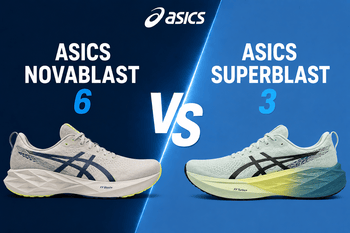
The ASICS Novablast 6 and Superblast 3 are highly cushioned neutral running shoes designed to provide an energetic ride.
Although they belong to the same ASICS Blast range, they occupy different positions within it.
The Novablast 6 is the more accessible running shoe, built for regular mileage and varied training.
The Superblast 3 is the premium option, combining a taller midsole with lighter, race-inspired cushioning. So, which model is the better choice?
ASICS Novablast 6 vs Superblast 3 Specifications
| Specification | ASICS Novablast 6 | ASICS Superblast 3 |
|---|---|---|
| Category | Neutral daily trainer | Premium max-cushioned trainer |
| Surface | Road | Road |
| Weight | 253 g / 8.9 oz | 239 g / 8.4 oz |
| Heel-to-toe drop | 8 mm | 8 mm |
| Cushioning | High | High |
| Main midsole foam | FF BLAST MAX | FF LEAP and FF BLAST PLUS |
| Forefoot design | FF TURBO SQUARED trampoline pod | Redesigned trampoline pod |
| Outsole | ASICSGRIP in the forefoot | FF ASICSGRIP and AHAR LO |
| Support type | Neutral | Neutral |
| Best suited to | Daily runs and mixed training | Long runs and faster sessions |
| UK launch price | Lower-priced option | £200 |
Official specifications list the Novablast 6 at 253 g and the Superblast 3 at 239 g, making the Superblast surprisingly lighter despite its larger construction. Both shoes use an 8 mm heel-to-toe drop.
Buy Novablast 6 – Buy Superblast 3
Info4Runners owner is an affiliate of Amazon.com. If you click a link on this site and make a purchase the owner may receive a commission of 1% – 6% respectively.
Cushioning and Ride
The largest difference is found in the midsole. The Novablast 6 uses FF BLAST MAX as its main cushioning material. ASICS has also added an FF TURBO SQUARED trampoline pod beneath the forefoot. This combination is intended to provide soft landings followed by a better toe-off.
This should make the Novablast 6 suitable for runners who want one comfortable shoe capable of handling easy runs, steady mileage and occasional faster efforts.
The Superblast 3 uses ASICS’ lighter FF LEAP foam alongside FF BLAST PLUS. FF LEAP is influenced by the cushioning used in the company’s Metaspeed racing range, although the Superblast 3 does not contain a carbon plate.
Its midsole measures approximately 46.5 mm at the heel and 38.5 mm at the forefoot. This substantial cushioning provides more protection for long-distance running, while the low overall weight helps prevent the shoe from feeling as cumbersome as many max-cushioned running shoes.
Which Shoe Feels Faster?
The Superblast 3 is likely to feel faster, particularly during long tempo runs. It weighs approximately 14 g less than the Novablast 6 and uses the more advanced FF LEAP cushioning.
Its tall midsole and trampoline-inspired forefoot geometry are designed to maintain momentum over longer distances. This makes it an interesting option for marathon training, progression runs and sessions that combine endurance with speed.
The Novablast 6 should still offer plenty of bounce for everyday training. Its FF TURBO SQUARED forefoot pod is intended to improve energy return during toe-off, giving it more versatility than a conventional soft daily trainer.
The Novablast is therefore not necessarily a slow shoe. The Superblast offers a lighter and more performance-focused build.
Comfort and Long-Distance Running
Both models provide high levels of cushioning, but the Superblast 3 has the advantage for extended runs. Its taller stack gives runners more material beneath the foot, while its lighter foam helps reduce the weight disadvantage usually associated with max cushioning. This could make it better suited to long runs and marathon training.
The Novablast 6 remains the more conventional everyday choice. It should feel easier to use for short recovery runs, moderate daily mileage and general training. Some runners may also prefer its lower platform, especially if they do not enjoy tall shoes.
Neither shoe includes a traditional stability system. Runners who require substantial guidance for overpronation may be better served by a stability model.
Upper and Fit
Both shoes use updated woven uppers designed to balance breathability, comfort and foot security. The Novablast 6 is available in separate men’s and women’s versions, with wider options offered in some markets. This may make it easier to find the correct fit if you have broad feet or need additional forefoot space.
The Superblast 3 is primarily sold as a unisex model. Its upper is designed to provide a secure fit during faster and longer efforts, but runners should check the unisex size conversion carefully before ordering. Fit remains personal, so trying both shoes is advisable if you have a wide forefoot, narrow heel or low-volume foot.
Outsole and Traction
ASICS has upgraded the Novablast 6 with ASICSGRIP rubber in the forefoot. This is intended to improve traction and provide a better toe-off, addressing an area where some previous Novablast models could feel less secure in wet conditions.
The Superblast 3 uses a combination of FF ASICSGRIP and AHAR LO rubber. This design aims to balance grip, durability and weight. Its outsole should be well suited to road running, although neither model is designed for technical trails.
Final Verdict
The Novablast 6 offers the better balance of versatility, accessibility and everyday practicality. It should suit runners who want an energetic daily trainer without paying for ASICS’ most advanced cushioning.
The Superblast 3 is the stronger choice for long-distance performance. It is taller yet lighter, uses the more responsive FF LEAP foam and is better equipped for demanding long runs.
For most runners, the Novablast 6 will provide everything needed for regular training. For runners covering long mileage or wanting a lightweight max-cushioned shoe for marathon training, the Superblast 3 could be the better choice.
Buy Novablast 6 – Buy Superblast 3
Info4Runners owner is an affiliate of Amazon.com. If you click a link on this site and make a purchase the owner may receive a commission of 1% – 6% respectively.
